Managing social media is a complex blend of art, science, and relentless efficiency. The days of simply posting and hoping for engagement are long gone. Today's top social media managers are data-driven strategists, content repurposing wizards, and community-building experts. Staying ahead requires a toolkit of advanced strategies that save time, amplify reach, and prove tangible business impact. For a holistic approach to enhancing your overall social presence, consider reviewing a complete guide to Social Media Optimisation.
This guide offers 10 battle-tested social media manager tips that move beyond the basics, providing actionable frameworks you can implement immediately. These are not generic suggestions; they are specific, tactical approaches designed for modern marketing challenges. We'll explore everything from building data-informed content calendars to establishing airtight editorial workflows that keep your team aligned and productive.
A key theme throughout is maximizing your resources. You'll learn how to turn a single internal meeting or a long-form video into a full week's worth of multi-platform social assets. We will explore how tools like Notize AI are revolutionizing these processes, transforming chaotic content streams from meetings, videos, or audio into organized, high-performing assets. With Notize AI, you can generate summaries, key insights, action items, and even draft blog posts, allowing you to repurpose content at scale without manual effort. These insights will help you reclaim your time, streamline your operations, and elevate your brand's social presence from a simple broadcast channel to a strategic business driver.
1. Repurpose Meeting Content into Multi-Platform Social Assets
Your team’s internal meetings, webinars, and client calls are untapped goldmines of authentic, high-value content. Instead of letting these conversations disappear, one of the most efficient social media manager tips is to systematically repurpose them into a wide array of social assets. This strategy maximizes the return on investment for every recorded hour, turning a single discussion into a week's worth of multi-platform content.
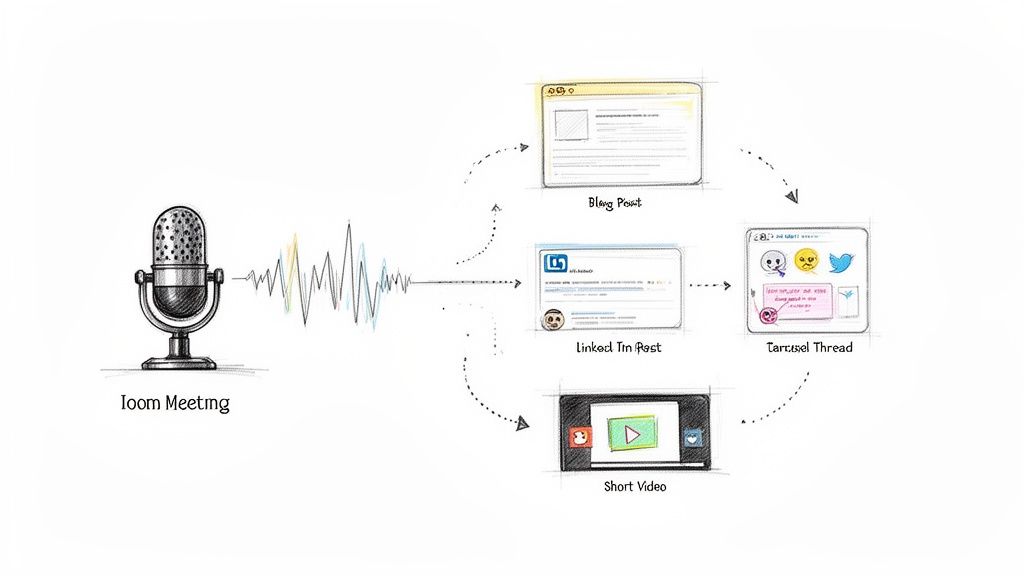
The process involves transforming these recordings into blog posts, LinkedIn articles, Twitter threads, Instagram carousels, and short-form videos. For example, a 30-minute product strategy meeting can yield powerful quotes from your CEO, insightful customer feedback for a carousel, and a technical explanation perfect for a short tutorial video. Modern SaaS teams at companies like HubSpot and Drift have popularized this method, using webinar recordings and customer call insights to fuel their entire content calendars.
How to Implement This Strategy
To streamline this workflow, tools like Notize AI are invaluable. After a meeting, simply upload the recording and Notize AI automatically produces a full summary, key discussion points, detailed notes with speaker attribution, and a list of action items. This allows you to quickly identify the most compelling moments without manual review, turning raw meeting audio into polished, ready-to-publish social content.
Here are actionable steps to get started:
Schedule "Content Harvest" Sessions: Dedicate a recurring time block each week to review recent meeting recordings specifically for social media content.
Create Content Templates: Develop standardized templates for different formats. For instance, a "Twitter Thread" template might outline a hook, 3-5 key points, and a call-to-action, making it easy to plug in insights extracted by Notize AI.
Tag Meetings Proactively: During recordings, use tags or keywords like "customer story," "product update," or "marketing insight" to make relevant discussions easily searchable later on.
Always Get Permission: Before sharing any participant quotes or company-specific information, ensure you have explicit consent to use it publicly.
By integrating this system, you create a sustainable content engine that leverages the expertise already present within your organization. To dive deeper into specific workflows, you can learn more about these powerful content repurposing strategies on Notize.ai.
2. Implement Data-Driven Content Calendars with Audience Insights
Moving beyond guesswork and into strategic planning is a hallmark of an effective social media manager. Instead of publishing content based on intuition, a data-driven approach uses analytics to understand exactly what your audience wants. This involves tracking engagement metrics like likes, shares, and clicks by content theme and format to build a calendar that consistently delivers high-performing posts.

This method ensures every piece of content has a purpose backed by evidence. For instance, data from Sprout Social reveals that video content can receive up to 10 times more engagement than static images, while Buffer's analysis of B2B clients found that posts on Tuesdays through Thursdays averaged 17% higher engagement. By identifying these patterns specific to your brand, you can optimize your schedule for maximum impact and allocate resources to formats that guarantee a return.
How to Implement This Strategy
To execute this effectively, you need a system for continuous analysis and adaptation. Tools like Notize AI can help by analyzing your existing content library—including video links, documents, and recordings—to reveal performance patterns and extract key themes, making it easier to make evidence-based decisions. This helps you understand what to create, when to publish, and how to structure your messaging for optimal results.
Here are actionable steps to get started:
Conduct Weekly Performance Reviews: Dedicate time each week to review your social media analytics. Look for top-performing posts and identify common threads in their topics, formats, and posting times.
A/B Test Systematically: Don't just post and pray. Systematically test variables like headlines, image styles, calls-to-action, and publication times to find what resonates most with different audience segments.
Build an 'Evergreen' Content Library: Identify your all-time best-performing posts and create evergreen templates based on them. These reliable formats can be reused with new information, ensuring a steady stream of engaging content.
Organize Your Workflow: A well-structured plan is crucial for consistency. For a practical guide on organizing your content, learn how to create a content calendar that ensures consistency and growth.
By grounding your content calendar in hard data, you transform your social media presence from a creative outlet into a predictable, performance-driving machine.
3. Build Community Through Consistent Engagement and Response Systems
Effective social media management goes beyond broadcasting content; it's about fostering a vibrant, two-way conversation. Building a loyal community requires a structured process for monitoring mentions, responding to comments, and actively engaging with audience conversations. This systematic approach ensures your brand is perceived as responsive and attentive, which significantly impacts community loyalty and even platform algorithms that favor high engagement.
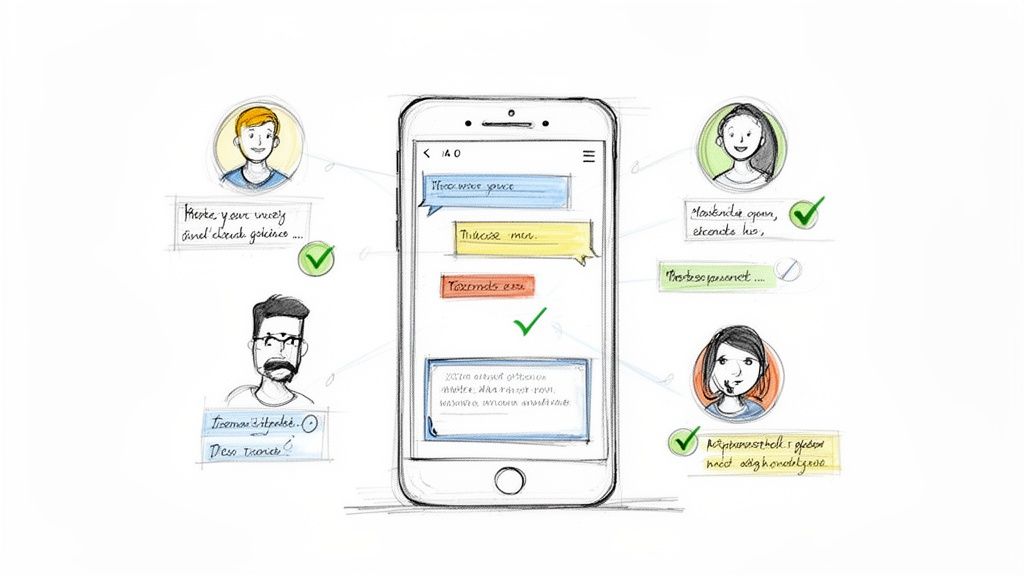
Brands that excel at this, like Wendy's with its witty Twitter replies or Zappos with its legendary customer service, prove that timely, authentic interaction builds powerful brand affinity. This isn't just about answering questions; it's about acknowledging feedback, celebrating user-generated content, and participating in relevant discussions. A consistent and rapid response system signals that you value your audience's input, transforming passive followers into active brand advocates. This is one of the most critical social media manager tips for long-term growth.
How to Implement This Strategy
To execute this at scale, you need a clear workflow and the right tools. For instance, after a customer support webinar or a product feedback session, you can use a tool like Notize AI to instantly summarize key customer questions and concerns. This allows you to proactively create response templates and FAQs, ensuring your team is prepared for common inquiries before they even arise.
Here are actionable steps to get started:
Set Response Time SLAs: Establish clear service-level agreements for responses. A common goal is under 24 hours for general comments and under two hours for urgent inquiries or direct messages.
Create Response Templates: Identify your top 10-15 most common questions and draft pre-approved, yet customizable, response templates. This saves time while ensuring brand consistency.
Assign Platform 'Owners': Designate a team member to own each social platform. This person becomes an expert on that channel's specific community tone, history, and key influencers.
Use Social Listening Tools: Monitor brand mentions that are not direct tags. Tools like Brand24 or Mention can help you find and join relevant conversations about your brand or industry.
Celebrate Your Community: Regularly feature user-generated content, run community spotlights, or simply thank your most engaged followers. This recognition encourages further participation.
4. Create Strategic Content Pillars and Topic Clusters
Instead of posting reactively, one of the most effective social media manager tips is to build your content calendar around strategic content pillars. This involves defining 3-5 core themes that align with your brand, resonate with your audience, and support your business goals. This structure ensures your messaging remains consistent, helps your content stand out, and establishes your brand as an authority in specific niches.
Content pillars act as the foundation, while topic clusters are the related subtopics that branch out, creating a web of interconnected content. For example, HubSpot, a master of this strategy, organizes its content around pillars like Education, Culture, Product, and Customer Stories. This framework guides their entire content creation process, from blog posts to social media updates, ensuring every piece contributes to a larger, cohesive brand narrative.
How to Implement This Strategy
The key is to select pillars that bridge the gap between what your audience wants and what your business offers. Once defined, these pillars become the guiding force for your content calendar, simplifying planning and ensuring every post has a purpose. With Notize AI, you can upload all your existing content (videos, documents, recordings) and ask it to identify recurring themes and audience questions, helping you define your pillars based on real data.
Here are actionable steps to get started:
Identify Your Pillars: Base your pillars on three criteria: your audience's primary interests, your areas of genuine expertise, and your core business objectives. For instance, a SaaS company might choose pillars like "Productivity Hacks," "Team Collaboration," and "Feature Spotlights."
Allocate Content Mix: A balanced approach is crucial. Aim for a mix where approximately 60% of your content directly supports your pillars, 20% engages with relevant trending topics, and 20% is dedicated to community building and direct engagement.
Document Pillar Guidelines: Create a clear guide that defines each pillar, outlines the tone of voice, and provides examples of post formats. This ensures consistency, especially as your team grows.
Review Pillar Performance: Don't set your pillars in stone. Schedule quarterly reviews to analyze which pillars are driving the most engagement, conversions, and brand growth, and be prepared to adjust your strategy based on performance data.
5. Leverage Short-Form Video and Vertical Content Across All Platforms
The rise of TikTok, Instagram Reels, and YouTube Shorts has fundamentally shifted user behavior, making vertical, short-form video the most dominant content format. One of the most critical social media manager tips is to prioritize creating these 15-90 second, mobile-first videos. These formats are heavily favored by platform algorithms and consistently drive significantly higher engagement and reach compared to static posts or traditional horizontal videos.

This strategy involves more than just hopping on trends. It's about systematically repurposing existing long-form content, capturing authentic behind-the-scenes moments, and creating educational or entertaining snippets that stop the scroll. For example, GoPro's Reels average 2-3 times higher engagement than their static carousel posts, while MrBeast uses YouTube Shorts to drive massive traffic to his longer-form videos. Duolingo's viral TikTok success, built on quick, humorous clips, proves that even educational content can thrive in this format.
How to Implement This Strategy
To efficiently produce a consistent stream of short-form video, you need a workflow that minimizes creation time. A powerful approach is to use a tool like Notize AI to extract compelling clips from longer videos, webinars, or even podcasts. By sending a YouTube link or uploading a video file, Notize AI can instantly summarize the content, identify key highlights, and even generate blog posts or step-by-step guides from the material. This turns a one-hour recording into five or more unique short-form videos and other content assets.
Here are actionable steps to get started:
Hook Viewers Immediately: The first 1-2 seconds are crucial. Start with strong movement, an intriguing text overlay, or a provocative question to capture attention instantly.
Design for Sound-Off Viewing: Since around 85% of social media videos are watched without sound, always use clear, easy-to-read captions or on-screen text to convey your message.
Leverage Trending Audio: Incorporating trending sounds can increase discoverability by 40-60% on platforms like TikTok and Instagram. Use them when they align with your brand's voice and message.
Maintain High Consistency: Feed the algorithms by posting short-form videos frequently. Aim for 3-5 times per week on primary platforms like Instagram Reels and TikTok to build momentum.
For a deeper dive into how top creators approach this, the video below breaks down the anatomy of a viral short-form video.
6. Build an Editorial Workflow with Clear Approval and Publishing Systems
Without a structured workflow, social media management can quickly devolve into chaos, leading to missed deadlines, inconsistent brand messaging, and preventable errors. One of the most critical social media manager tips for scaling teams is to establish a documented, step-by-step process for content creation, review, approval, and publishing. This system creates a clear path for every piece of content, ensuring quality control and brand alignment.
A well-defined editorial workflow prevents bottlenecks and empowers your team to move efficiently. The process typically follows a clear sequence: ideation → drafting → internal review → stakeholder approval → scheduling → publishing → analytics. Media giants like Forbes and The New York Times use rigorous multi-stage approval systems to maintain brand integrity, while tech companies like Buffer and Mailchimp have demonstrated how transparent workflows enable both speed and quality.
How to Implement This Strategy
To build an effective workflow, the goal is to create a predictable and repeatable system that eliminates confusion. Assigning clear ownership and deadlines at each stage is essential for keeping the content pipeline moving smoothly. A tool like Notize AI can facilitate this by turning recorded brainstorming sessions or stakeholder feedback meetings into structured notes and action items, ensuring all feedback is captured and assigned correctly.
Here are actionable steps to get started:
Document and Visualize the Process: Create a simple flowchart or document outlining each step, from the initial idea to the final post-publication analysis. This visual guide is invaluable for onboarding new team members.
Set Clear Deadlines for Each Stage: Assign specific timelines, for example, drafts due on Monday, internal reviews completed by Wednesday, and final approvals for scheduling by Friday.
Establish a Fast-Track for Timely Content: Design an expedited approval process for time-sensitive content related to trending topics or breaking news, allowing you to remain agile without sacrificing quality.
Empower Your Team with Templates: Provide junior team members with pre-approved templates for common post types. This speeds up the creation process and ensures a baseline level of brand consistency.
Review and Optimize Quarterly: Your workflow is not static. Schedule regular reviews to identify bottlenecks and gather team feedback to make iterative improvements.
7. Use Social Listening and Sentiment Analysis to Guide Strategy
Instead of guessing what your audience wants, one of the most powerful social media manager tips is to let them tell you directly. Social listening involves actively monitoring conversations about your brand, competitors, and industry to understand public sentiment, identify emerging trends, and spot potential crises before they escalate. This data-driven approach moves your strategy from reactive to proactive, ensuring your content is always relevant and timely.
This process reveals what your audience truly cares about, the language they use, and the pain points they face, allowing you to fill content gaps and inform product development. For instance, Nike detected growing consumer interest in sustainability through social listening and launched its innovative Flyleather line in response. Similarly, Starbucks used sentiment analysis to catch a brewing crisis regarding racial bias, enabling them to respond hours before mainstream media picked up the story.
How to Implement This Strategy
To effectively integrate social listening, you need a systematic approach for monitoring, analyzing, and acting on the insights you gather. This involves setting up dedicated tools and establishing a clear workflow for sharing findings with relevant teams across your organization, from marketing to product development.
Here are actionable steps to get started:
Monitor Five Key Categories: Set up tracking for brand mentions (with and without tags), key competitors, critical industry terms, common audience pain points, and relevant trending topics.
Set Up Smart Alerts: Configure automated alerts for high-priority keywords, significant spikes in negative sentiment, or mentions from influential accounts to enable rapid response.
Create a Shared Dashboard: Document and visualize trends in a shared space, tracking metrics like sentiment scores, conversation volume, and key phrases over time.
Fuel Your Content Calendar: Use the questions, complaints, and praises you discover to generate content ideas that directly address what your audience is already discussing. You can even save links to relevant user-generated videos in Notize AI to analyze them for common themes and talking points.
Develop a Crisis Playbook: Create a rapid-response plan for handling spikes in negative sentiment, outlining who to notify, what steps to take, and approved messaging.
8. Implement Time-Blocking and Batching for Content Creation Efficiency
One of the most impactful social media manager tips for reclaiming your schedule is to stop multitasking. Instead of juggling content creation, editing, and community management throughout the day, dedicate specific time blocks to each function. This approach, known as time-blocking and batching, dramatically reduces context-switching, deepens focus, and enables you to produce a higher volume of quality content in less time.
Content batching involves creating multiple pieces of content in a single, dedicated session, then scheduling them to publish over the coming days or weeks. This strategy is popularized by hyper-productive creators like Amy Porterfield, who batches a month of content in just a few intensive sessions, and MrBeast, who films dozens of videos at once to fuel his channel. The core principle is simple: separate the creative process from the administrative tasks of publishing and engagement.
How to Implement This Strategy
To make batching effective, you need a system that supports rapid creation and processing. For instance, if you batch-record a series of podcast episodes or short videos, you need an efficient way to turn those recordings into usable assets. Using a tool like Notize AI allows you to upload all your batched video or audio files at once. It can then automatically transcribe, summarize, extract key quotes, and even generate blog posts in your brand's tone, turning a full day of recording into a folder of ready-to-use social media drafts.
Here are actionable steps to get started:
Schedule "Content Days": Dedicate two or three 4-6 hour blocks per month exclusively for content creation. Protect this time fiercely and eliminate all other distractions.
Create a Content Buffer: Use your batching sessions to build a 2-4 week content reserve. This buffer gives you breathing room and prevents last-minute scrambling.
Time-Block Administrative Tasks: Schedule separate, shorter blocks (30-60 minutes daily) specifically for community engagement, responding to comments, and reviewing analytics.
Use Pre-Production Checklists: Before a batching session, prepare everything you need: topics, outlines, graphics templates, and props. This minimizes friction and maximizes your creative energy during the session.
By adopting this workflow, you transition from a reactive, chaotic schedule to a proactive, controlled one. To explore how AI can supercharge your batched content, discover more about AI for content creation on Notize.ai.
9. Create Employee Advocacy and User-Generated Content Programs
Your most powerful brand advocates are often already in your network: your employees and your customers. One of the most impactful social media manager tips is to formalize programs that empower them to share content. This strategy transforms passive followers into active promoters, creating authentic social proof and dramatically expanding your reach through their trusted personal networks.
An employee advocacy program turns your team into a powerful distribution channel, while a user-generated content (UGC) initiative makes your customers your best content creators. Brands that master this see exponential returns; research shows employee advocacy can increase content reach by over 500%, and UGC drives significantly higher engagement and trust compared to standard branded content. Companies like Glossier and Starbucks have built empires on this principle, turning customer photos into the cornerstone of their social presence.
How to Implement This Strategy
To succeed, you must make participation frictionless and rewarding. The goal is to remove any barriers that prevent employees or customers from sharing. This involves providing clear guidelines, easy-to-use tools, and consistent recognition for their contributions. For example, using Notize AI, you can record a quick training video for employees, and it will automatically generate a step-by-step guide and shareable summary to make the process foolproof.
Here are actionable steps to get started:
Establish Clear Guidelines: Create a simple document outlining brand voice, appropriate topics, and necessary disclosures (like #ad or #employee). This protects your brand and gives participants confidence.
Provide Pre-Approved Content: Use a shared folder or a dedicated Slack channel to provide 5-10 pre-written posts, images, and links each week. This one-click sharing model makes it incredibly easy for employees to participate.
Launch a Branded Hashtag Campaign: Create a unique and memorable hashtag for your UGC program, like Starbucks' famous #RedCupContest. Promote it across all channels and encourage customers to use it for a chance to be featured.
Feature and Celebrate Contributors: Prominently showcase the best employee posts and customer UGC on your official channels. Public recognition is a powerful motivator and encourages others to join in.
Offer Meaningful Incentives: While recognition is key, small incentives like gift cards, company swag, or exclusive access can boost participation. Track top contributors and reward them accordingly.
10. Measure and Report on Social ROI with Clear KPIs and Dashboards
Effective social media management moves beyond vanity metrics like likes and follower counts to measure what truly impacts the bottom line. One of the most critical social media manager tips is to define clear Key Performance Indicators (KPIs) tied directly to business goals. This approach proves the value of your efforts and transforms social media from a cost center into a documented revenue driver.
By tracking metrics such as traffic, leads, conversions, and customer retention, you can calculate the real return on investment (ROI) of your social strategy. Companies that master this see tangible results; for example, HubSpot found that social-generated leads are often more qualified, and Sprout Social customers report an average 4.2x ROI on their social investment. This data-driven method justifies budgets and guides future strategic decisions with precision.
How to Implement This Strategy
The first step is to align social media KPIs with broader business objectives. If the company goal is to increase sales, your primary KPIs should be conversion rate and cost per acquisition (CAC) from social channels. If the goal is brand awareness, focus on reach, impressions, and share of voice. This alignment ensures your work directly contributes to what stakeholders care about most.
Here are actionable steps to get started:
Define Goal-Specific KPIs: Assign distinct metrics for each objective. For awareness, track reach; for engagement, track share rate; for conversions, use click-through rate (CTR) and conversion value.
Use UTM Parameters: Tag every link you share on social media with unique UTM parameters. This allows you to accurately track how much traffic and how many conversions originate from specific platforms, campaigns, or even individual posts in Google Analytics.
Build a Centralized Dashboard: Create a single, easy-to-read dashboard that displays your top 5-7 KPIs. This provides a weekly snapshot of performance without getting lost in overwhelming data.
Automate Reporting with AI: Use tools like Notize AI to analyze stakeholder meeting recordings where social performance is discussed. Notize AI can automatically generate summaries and action items, ensuring you capture every strategic directive and follow-up task related to your KPIs, keeping your team aligned on reporting goals.
By implementing a robust measurement framework, you provide clear, undeniable proof of social media's value. To learn more about creating a powerful reporting system, you can explore building a comprehensive social media analytics dashboard on Notize.ai.
Top 10 Social Media Manager Tips Comparison
Strategy | 🔄 Implementation Complexity | ⚡ Resource Requirements | 📊 Expected Outcomes | 💡 Ideal Use Cases | ⭐ Key Advantages |
|---|---|---|---|---|---|
Repurpose Meeting Content into Multi-Platform Social Assets | 🔄 Medium — set up recordings, permissions, tagging workflows | ⚡ Low–Medium — transcription AI, storage, editorial time | 📊 High content volume; ~60–70% content creation time saved; consistent cross-platform assets | 💡 Webinars, customer calls, internal knowledge → social posts, blog snippets, short videos | ⭐ Maximizes content ROI; authentic, fast turnaround |
Implement Data-Driven Content Calendars with Audience Insights | 🔄 Medium — analytics configuration, tagging, cadence planning | ⚡ Medium — analytics tools, 2–4 weeks data collection, analyst time | 📊 Increased engagement (+40–50%); reduced guesswork; better scheduling | 💡 Campaign planning, cadence optimization, content experimentation | ⭐ Evidence-based strategy; predictable performance gains |
Build Community Through Consistent Engagement and Response Systems | 🔄 Medium–High — monitoring, SLAs, moderation workflows | ⚡ High — dedicated community managers, monitoring tools, templates | 📊 Higher loyalty and retention; algorithmic boost; faster response times | 💡 Customer support, brand building, crisis response, active communities | ⭐ Builds trust and real-time feedback loops; improves brand voice |
Create Strategic Content Pillars and Topic Clusters | 🔄 Medium — upfront strategy, pillar definition, tagging | ⚡ Low–Medium — editorial planning, taxonomy and tools | 📊 Improved consistency and SEO; clearer brand authority; easier measurement by pillar | 💡 Long-term brand positioning, SEO-driven content programs, onboarding new creators | ⭐ Consistency at scale; simplifies creation and delegation |
Leverage Short-Form Video and Vertical Content Across All Platforms | 🔄 Medium — production, editing, format optimization | ⚡ Medium — video tools, editing skills, repurposing workflows | 📊 Much higher engagement and completion rates; better discovery on platforms | 💡 Awareness, product highlights, entertainment, repurposing long-form clips | ⭐ Algorithm-friendly format; high reach and engagement |
Build an Editorial Workflow with Clear Approval and Publishing Systems | 🔄 Medium–High — multi-stage approvals, automation, version control | ⚡ Medium — workflow tools, role assignment, audit trails | 📊 Fewer publishing errors; faster, accountable approval cycles; consistent quality | 💡 Large teams, regulated brands, multi-stakeholder content | ⭐ Reduces risk; enforces quality and accountability |
Use Social Listening and Sentiment Analysis to Guide Strategy | 🔄 Medium — keyword setup, noise filtering, alerting | ⚡ Medium–High — listening tools, analyst time, dashboards | 📊 Early trend detection; crisis alerts; product and content insights | 💡 Competitive monitoring, product validation, PR and crisis management | ⭐ Proactive insights; identifies unmet needs and threats early |
Implement Time-Blocking and Batching for Content Creation Efficiency | 🔄 Low — scheduling discipline and batching templates | ⚡ Low — planning time, batch scheduling tools, templates | 📊 40–60% higher output; consistent publishing cadence; less context-switching | 💡 Solo creators, small teams, high-volume content pipelines | ⭐ Boosts productivity; reduces decision fatigue |
Create Employee Advocacy and User-Generated Content Programs | 🔄 Medium — guidelines, incentives, rights & curation processes | ⚡ Medium — curation tools, legal oversight, incentive management | 📊 Extended organic reach (~8x with employee networks); higher engagement (UGC 5x) | 💡 Brand trust-building, social proof campaigns, community amplification | ⭐ Authentic amplification; reduces branded content burden |
Measure and Report on Social ROI with Clear KPIs and Dashboards | 🔄 Medium–High — attribution setup, integrations, KPI alignment | ⚡ Medium — analytics stack, UTM/CRM integrations, reporting time | 📊 Business-aligned metrics, clearer budget justification, data-driven optimizations | 💡 Executive reporting, budget allocation, channel optimization | ⭐ Demonstrates ROI; informs strategic investment decisions |
From Strategy to Action: Your Path to Social Media Mastery
Navigating the dynamic world of social media requires more than just posting content; it demands a fusion of strategy, creativity, and ruthless efficiency. The ten comprehensive social media manager tips we've explored provide a blueprint for transforming your approach from reactive to revolutionary. We've moved beyond surface-level advice to give you a concrete framework for building a high-impact social media program that doesn't just capture attention but drives measurable business outcomes.
The journey to mastery begins with a strategic foundation. By establishing clear content pillars and topic clusters, you ensure every post serves a purpose. Layering on a data-driven content calendar, informed by social listening and audience sentiment analysis, elevates your strategy from guesswork to a precise, targeted operation. You are no longer just participating in conversations; you are starting them based on what your audience truly cares about. This is the first major shift: from content creator to strategic communicator.
Building Systems for Sustainable Success
A great strategy is only as powerful as its execution. This is where operational excellence comes into play. Implementing structured editorial workflows with clear approval systems eliminates bottlenecks and ensures brand consistency. Paired with efficiency techniques like time-blocking and content batching, you reclaim valuable hours, freeing yourself from the constant pressure of the content treadmill.
This newfound time can be reinvested into high-value activities, such as building robust community engagement systems and fostering powerful employee advocacy and user-generated content programs. These initiatives turn your audience from passive consumers into active brand champions, amplifying your reach and building authentic social proof. The key takeaway is that efficiency isn't just about doing things faster; it's about creating the space to do more of the right things.
The Power of Smart Repurposing and Measurement
One of the most potent social media manager tips is to work smarter, not harder, with your existing assets. The days of one-and-done content are over. By systematically repurposing valuable content, like turning a single team meeting or a product webinar into a dozen multi-platform social assets, you maximize your ROI and ensure your best insights reach the widest possible audience. This is where tools become indispensable. For instance, a social media manager can upload a recording of a strategic planning session to Notize AI and instantly receive a summary, key discussion points, and even draft captions for LinkedIn, turning internal knowledge into external thought leadership. This automated process is a game-changer for content creation.
Finally, none of these efforts matter without a clear understanding of their impact. Establishing clear KPIs and using dashboards to measure social ROI closes the loop, demonstrating the tangible value your work brings to the organization. This focus on measurement transforms your role from a cost center to a revenue driver, solidifying your position as an essential strategic partner. By integrating these practices, you're not just managing social media; you're mastering it, building a resilient and effective program that consistently delivers results.
Ready to reclaim hours of your week and supercharge your content creation process? Stop manually transcribing videos and brainstorming post ideas from scratch. Notize AI can automatically turn your video links, meeting recordings, and audio files into summaries, blog posts, and ready-to-publish social content in seconds. Try Notize AI today and see how effortless content repurposing can be.
10 Actionable Social Media Manager Tips for Peak Performance in 2026